
Compare Accounts For Buying Cryptocurrency
Use our reviews and comparison table of the best places to buy Cryptocurrency in the UK. You can compare accounts costs, minimum deposit and the number of cryptocurrencies on offer. Plus the different ways to buy and sell cryptocurrencies. Please Note: Investing in cryptocurrencies is very high risk and there is a very high chance you may lose all your money.
| Name | Logo | GMG Rating | Customer Reviews | Cryptocurrencies | Commission | CTA | Tag | Feature | Expand | |||||||||||||||||||||||||
|---|---|---|---|---|---|---|---|---|---|---|---|---|---|---|---|---|---|---|---|---|---|---|---|---|---|---|---|---|---|---|---|---|---|---|
 |
GMG Rating |
Customer Reviews |
Cryptocurrencies 55+ |
Commission 0% |
Featured Crypto Platform |
Features:
|
IG Cryptocurrency Trading Expert ratingOur expert rating is the average of the areas listed here, each scored out of 5 by our team.4.7Excellent Our experts have rated IG Cryptocurrency Trading across five key areas of our review framework.
Pros
Cons
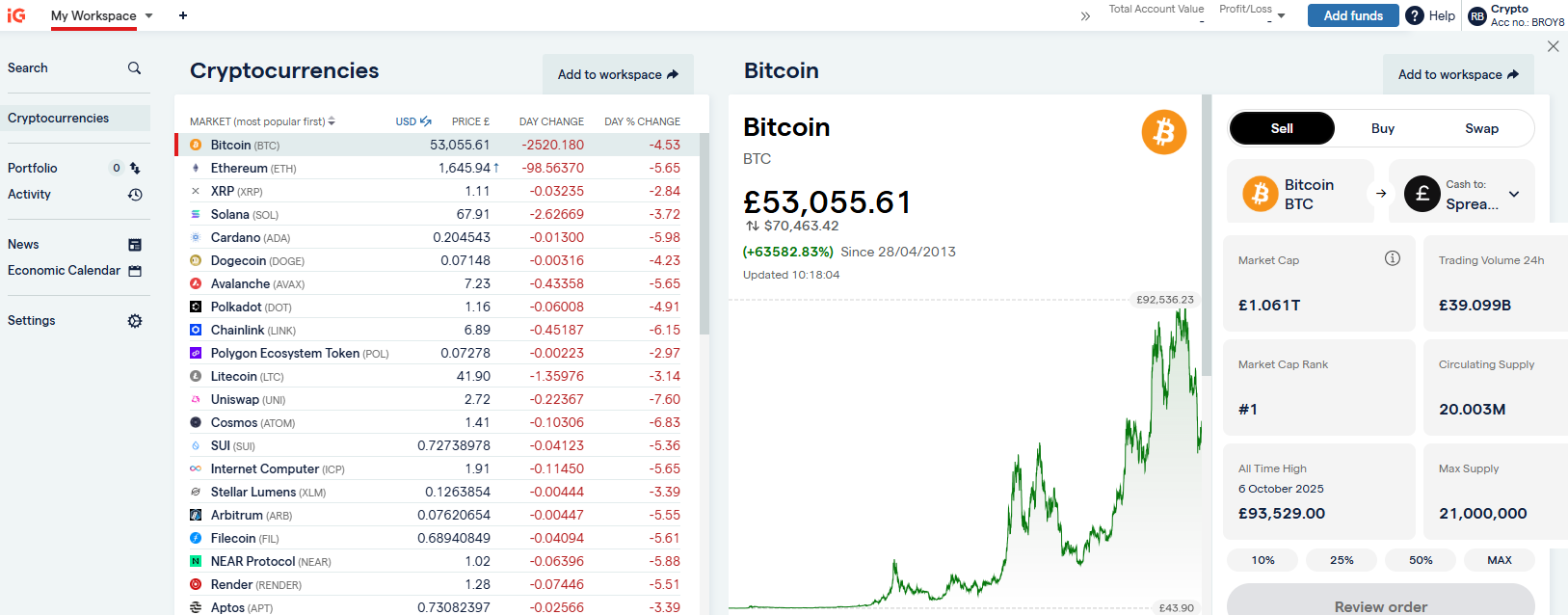
Our verdictAfter shying away from crypto post the FCA cryptocurrency ban for retail investors and following comments from the new IG CEO that “IG must have a crypto offering” IG has launched crypto investing for retail. IG also offers 55 cryptocurrencies that can be invested in. Professional account holders can also invest in 4 cryptocurrency ETFs and over 20 Bitcoin ETFs or trade crypto as a CFD or financial spread bet. Don’t invest unless you’re prepared to lose all the money you invest. Is IG good for cryptocurrency investing?Yes, we rate IG as a good cryptocurrency platform due it being a well-established broker, a listed company on the London Stock Exchange FTSE 100, as well as offering good pricing, excellent platforms and apps, plus one of the best suits of news, analysis and research available. Pricing: For the majority of cryptocurrencies, there is a 1.49% crypto trading fee, however, if you are trading Bitcoin, Ethereum or Solana, there is no dealing commission. Market Access: 55 cryptocurrencies means you can trade the most popular digital assets without getting drawn into the merky world of “alt or meme coins”. App & Platform: intuitive and industry-leading. Customer Service: live chat, email and dedicated dealers for active and premium clients. Research & Analysis: – a huge range of analysis and news feeds on the platform, plus an award winning podcast and constaly updated social channels. How do you trade crypto on IG? To trade crypto on IG, just go to your dashboard that lists your share dealing, CFD, spread betting and MT4 accounts. At the bottom is a section labeled “Crypto”. You then have to go confirm that you are either a high net worth investor, or at least only planning on investing a small portion of your net worth. Once confirmed, you’ll also have to take a quiz proving that you understand the risks involved in cryptocurrencies. There are seven questions and you only get two chances, so if you fail twic,e your account is put on hold. What does IG’s crypto trading platform look like? It’s the same look and feel as the usual IG platform, but keep in mind that when you open an account, you’ll be in a “cooling off period”. This is a requirement from the FCA to ensure that you’ve not got overexcited by spivvy crypto bros on social media, before you enter the wild west of cryptocurrency investing.
Don’t invest unless you’re prepared to lose all the money you invest. This is a high-risk investment and you should not expect to be protected if something goes wrong. Is IG good for cryptocurrency trading? Yes, IG is good for trading cryptocurrency CFDs if you have a professional trading account. In fact they were one of the first online trading platforms to introduce a cryptocurrency index where you can speculate on the top ten cryptocurrencies in one go, almost like a precursor to a Bitcoin or crypto ETFs. IG recently stated in their interim results that they hold of £65m of cryptocurrency assets on cryptocurrency exchanges and in vaults. The rise of Bitcoin has led to a wave of new crypto-based products, such as the Cryptocurrency Index. When an asset class exhibits impressive relative strength, it attracts attention and interest. Capital swiftly follows. Bitcoin’s rather large rally further whips up bullish sentiment. Those who missed the previous Bitcoin boom may be keen to participate in the next one. With interest growing, Crypto-based indices could be a good way to gain exposure to the market. Lately, several spread-betting firms have been getting on the act on this aspect. A crypto index is based on a basket of coins. Depending on the weighting of each coin, the index will fluctuate according to the underlying constituents. For many traders, gaining exposure to a basket of coins is more preferable to buying just one single coin – simply because not all coins will move at the same rate. IG Index, for example, provided a Crypto 10 Index to help its customers to bet on a diversified array of crypto coins. According to its website, IG’s Crypto 10 Index is based on the largest ten cryptocurrencies. The index is calculated and maintained by BITA GmbH. Below, you can see a snapshot of the Index on IG’s website. The buy-sell spread is around 40 points, and margin around 50% (retail). According to BITA’s website, Bitcoin and Ethereum made up around 50% of this Crypto 10 Index. |
|||||||||||||||||||||||||||
 |
GMG Rating |
Customer Reviews |
Cryptocurrencies 9 ETNs |
Commission £3.95 to £6.95 |
Features:
|
Hargreaves Lansdown Cryptocurrency Investing Expert ratingOur expert rating is the average of the areas listed here, each scored out of 5 by our team.3.6Basic Our experts have rated Hargreaves Lansdown Cryptocurrency Investing across five key areas of our review framework.
Pros
Cons
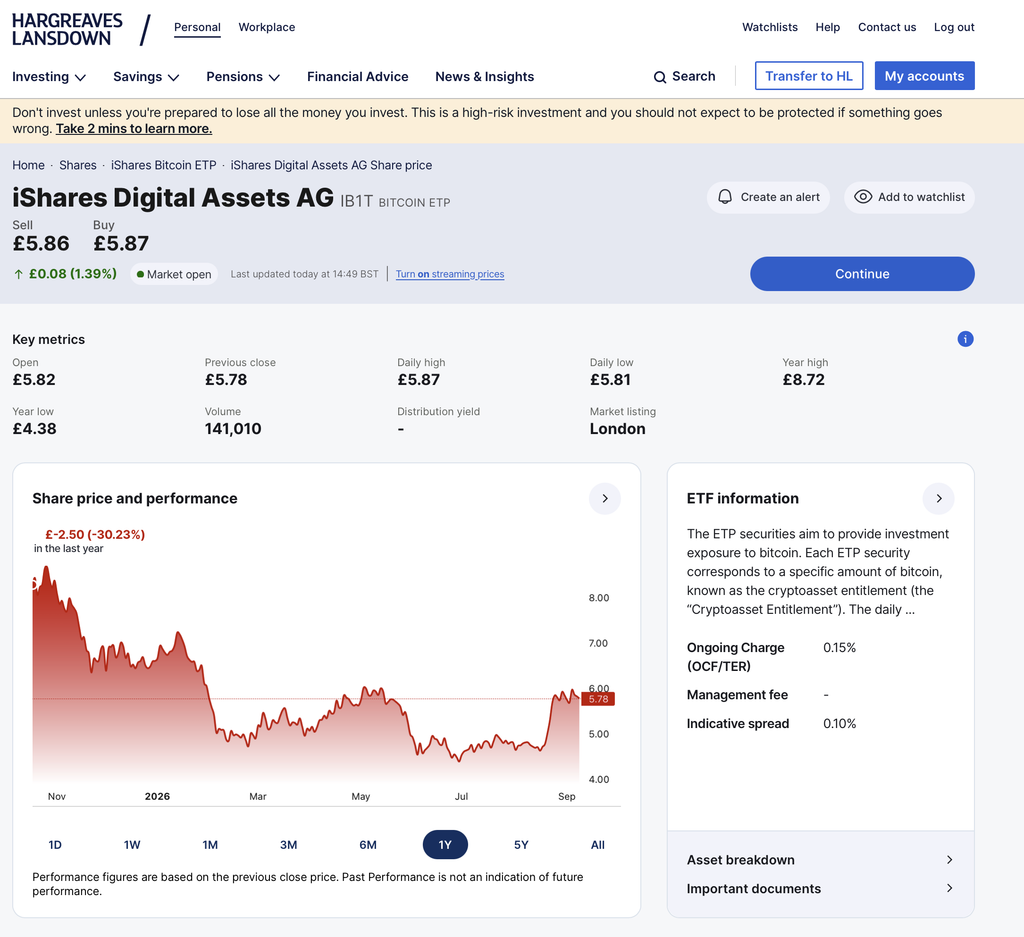
Our verdictHargreaves Lansdown offers access to a range of crypto exchange-traded notes (crypto ETNs). These are regulated stock market-listed investments that track cryptocurrency prices. With these products, you can get exposure to crypto prices without holding any crypto-assets directly yourself and without having to worry about things like crypto wallets and passkeys. And you can trade them just like regular stocks. The launch of Hargreaves Lansdown’s crypto ETNs is a positive development. At last, UK investors can access crypto assets through the platform. However, at this stage, the offering is rather limited. And getting set-up to trade is a slow, cumbersome process. What crypto products does Hargreaves Lansdown offer?At present, there are a range of crypto ETNs that have ongoing charges on offer including:
Of the crypto funds on HL, the iShares Bitcoin ETP (IB1T) is the most well-known. Managed by BlackRock, it is the largest Bitcoin fund in the world.
How do Hargreaves Lansdown’s crypto ETNs work? Crypto ETNs are debt securities issued by financial institutions. Issuers use investors’ capital to buy and hold crypto-assets on behalf of the investors. With these products, you don’t own the crypto-assets yourself directly. Instead, you own a product that is designed to track the price of certain crypto assets. Can you hold Hargreaves Lansdown’s crypto ETNs in a Stocks and Shares ISA? Hargreaves Lansdown’s crypto ETNs cannot be held in a Stocks and Shares ISA. They can either be held in a regular Fund and Share Account or a SIPP. Hargreaves Lansdown’s crypto ETN fees With Hargreaves Lansdown, there are a range of fees to be aware of:
Who can invest in Hargreaves Lansdown’s crypto ETNs? Hargreaves Lansdown’s crypto ETNs are available only to certain types of investors:
Note that before you can invest in a crypto ETN, you’ll need to pass an appropriateness assessment confirming you have enough knowledge and experience. How to trade crypto ETNs with Hargreaves Lansdown Trading crypto ETNs with Hargreaves Lansdown is a rather cumbersome process. First, you must self-certify as an advanced investor. Then, you must complete a suitability questionnaire. Once this is completed, you then need to wait 24 hours to be able to see the range of products on offer. Finally, you have to review the investment criteria before you can trade. Obviously, these steps are designed to protect investors. However, compared to other crypto platforms, getting set up to trade was slow. Are Hargreaves Lansdown’s Crypto ETNs protected by the FSCS? Hargreaves Lansdown’s crypto ETNs are not covered by the Financial Services Compensation Scheme (FSCS). Meanwhile, the Financial Ombudsman Service does not cover poor investment performance. Are Hargreaves Lansdown’s crypto ETNs risky? Hargreaves Lansdown’s crypto ETNs are high-risk investments. With these products, you should be prepared to lose all the money you invest. Platform and app Hargreaves Lansdown’s platform and app are well designed and easy to use. However, they do have their flaws. For example, on the desktop platform, US stock prices are displayed in pence. That’s not ideal. Research and value added Hargreaves Lansdown does offer research on its website. However, there is minimal research dedicated to crypto-assets. Customer service Hargreaves Lansdown’s customer service is generally solid, however, it’s not what it used to be. For example, during the week, phone support is only available between 8am and 5pm now. |
||||||||||||||||||||||||||||
 |
GMG Rating |
Customer Reviews |
Cryptocurrencies 30 |
Commission 1.49% |
Features:
|
Revolut Cryptocurrency Investing Expert ratingOur expert rating is the average of the areas listed here, each scored out of 5 by our team.4.3Very good Our experts have rated Revolut Cryptocurrency Investing across five key areas of our review framework.
Pros
Cons
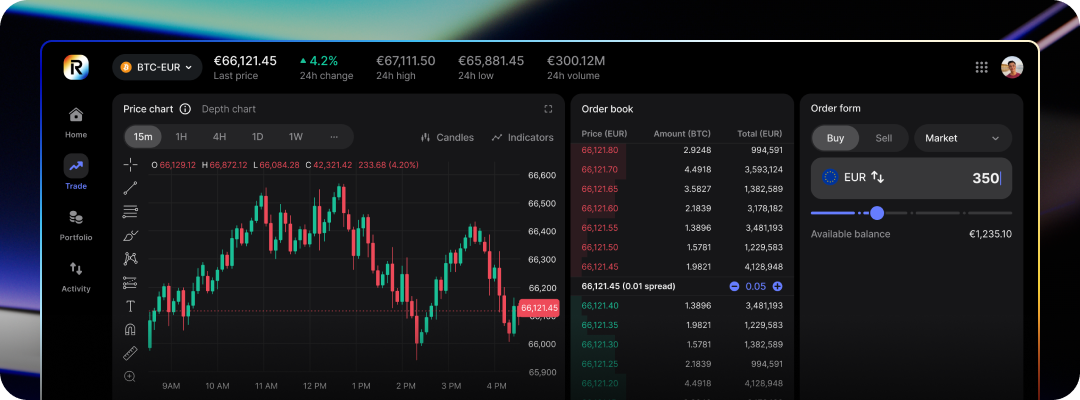
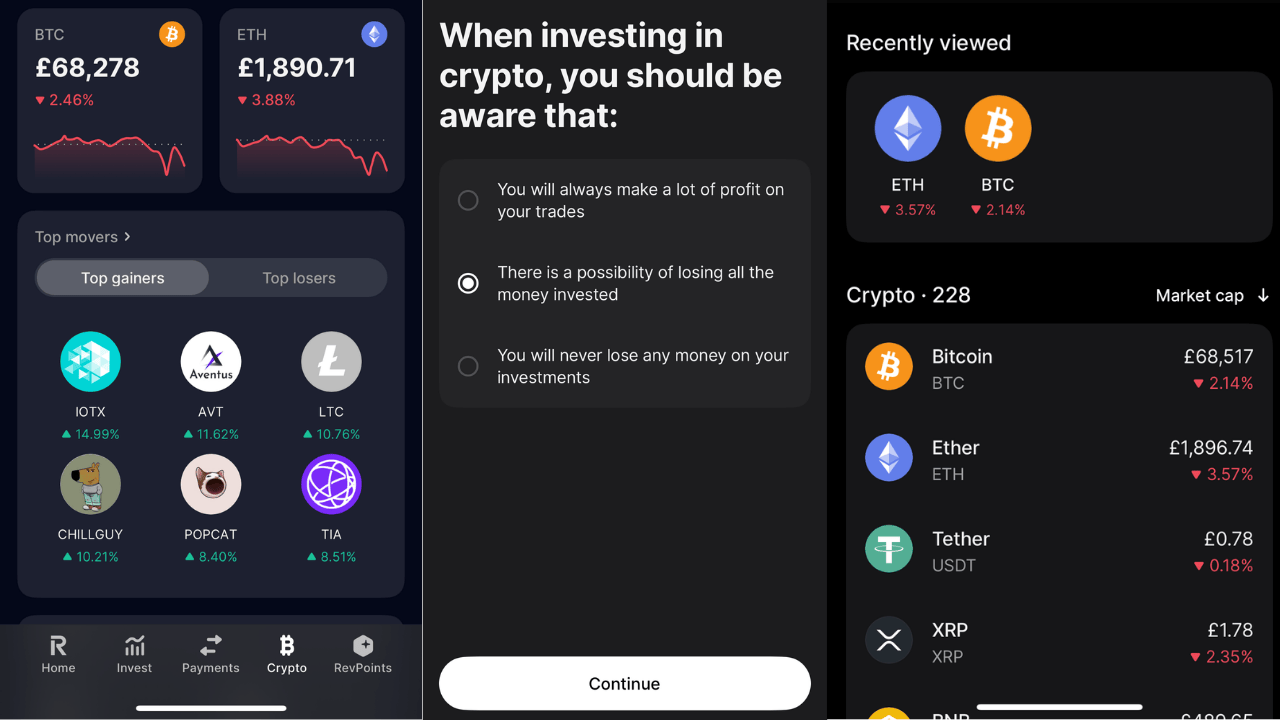
Our verdictRevolut X cryptocurrency app lets you trade 400 pairs with 0% maker fees on a stand alone app. As Revolut is now a bank more than a crypto exchange, its app is a good way to dabble in the crypto markets if you just want to buy a small amount of the most popular cryptocurrencies. Capital at risk Is Revolut good for cryptocurrency investing?Revolut is a good choice if you are just dabbling in cryptocurrency and don’t need anything too complicated. Market Access: Revolut X lets you trade 400+ pairs to trade in real-time with USD, EUR, or GBP with instant visibility of how your portfolio is performing and decide your next trade with token details and a live order book. On the baking app you can buy, sell, and send over 228 digital currencies at the touch of a button, with no hidden fees. But, Revolut’s cryptocurrency service is not regulated by the FCA in the same way as investing in the stock market. As you will find out when you take the “how well do you understand crypto” quiz when you try to buy cryptocurrencies on the app. App & Online Platform: It’s pretty easy to buy crypto on Revolut, it took me about 3 minutes to login, acept the terms and conditions that I may lose all my money and buy some Bitcoin and Ethereum. If you want to know which is best, we’ve just written a guide on Bitcoin versus Ethereum. However, it’s a bit annoying that it’s app only and you can’t use it on a laptop or desktop. If you are trading crypto on Revolut X it is also available on desktop if you want to see more detailed market analysis. You’ll find technical indicators, TradingView charts, and top-traded, top-gaining, and top market cap coins.
Revolut Fees: Versuse eToro & Coinbase For Crypto Revolut X does not charge if you are a (taker) selling, but there is a 0.09% charge if you are buying (making). The difference is based on if you are making or taking liquidity from the exchange. Revolut has recently reduced it’s commission for buying and selling cryptocurrency for trades above £20,000 from 1.49% to 1.29%. From 24 March 2025, Revolut has also removed the minimum trading limit, so you can now make trades below £1.49. In real-terms that means if you bought £100k worth of Bitcoin it would save you £180 compared to the previous pricing structure. It’s a decent saving. but won’t really make a difference, especially as if you buy £100k of one of the most volatile digital assets in the world the price will probably have changed by that much before you have read your confirmation notification. Fees are pretty high, if you are just buying a small amount. To test the app, I bought £200 worth of each I was charged a whopping £2.98, which is 1.49%. That’s very high compared to buying share,s which are largely commission-free these days. However, Revolut has recently reduced their crypto commission for trades above £20,000. It’s not as cheap as eToro’s 1%, but it’s certainly a lot cheaper than Coinbase.
Customer Service: Obviously, there is no phone number (Revolut has far too many customers for a call centre to handle), and no in-app live chat feature, but there are direct links if you need to report any fraud or banking issues. Research & Analysis: You get access to some fairly standard articles and news feeds on crypto but nothing unique. There are links to the cryptocurrencies official websites and the white papers, so you can do your own more thorough research.
|
||||||||||||||||||||||||||||
 |
GMG Rating |
Customer Reviews |
Cryptocurrencies 8 |
Commission 0.12% to 0.18% |
Features:
|
Interactive Brokers Cryptocurrency Trading Expert ratingOur expert rating is the average of the areas listed here, each scored out of 5 by our team.4.8Excellent Our experts have rated Interactive Brokers Cryptocurrency Trading across five key areas of our review framework.
Pros
Cons
Our verdictInteractive Brokers, offers cryptocurrency trading for its UK clients through Paxos that allows individuals, institutional investors, and financial advisers, to trade popular cryptocurrencies such as Bitcoin (BTC), Ethereum (ETH), Litecoin (LTC), and Bitcoin Cash (BCH). This is in addition to other more traditional investment products, such as stocks, options, futures, currencies, bonds, funds, and ETFs. All from a single unified platform. Is Interactive Brokers Good For Crypto Trading?Interactive Brokers has partnered with the Paxos Trust Company, a New York-based regulated trust company and custodian with expertise in digital assets, securities and payments, to provide cryptocurrency brokerage. Interactive Brokers’ UK clients will have a unified view of their IBKR securities brokerage account and their crypto account at PaxosTrust Company. This means clients will be able to manage their cash, trade cryptocurrencies, and invest in other asset classes, all from a single trading screen. Gerald Perez, Chief Executive Officer at Interactive Brokers (U.K.) Limited said of the new service: “Interactive Brokers offers a wide selection of global investment products, sophisticated technology and competitive pricing,” He added “Introducing cryptocurrency trading gives UK clients enhanced flexibility to invest across markets and asset classes while also adding exposure to digital assets.” Platforms for newbies and pros There are two types of crypto account for UK traders on Interactive Brokers Basic Crypto lets you trade and hold Bitcoin, Bitcoin Cash, Ethereum, and Litecoin through the IBKR platform. There are no additional or separate funding transactions are required and IBKR handles all required cashiering for you automatically, and unvested cash is always kept in your IBKR brokerage account. Crypto Plus lets you fund your crypto account, trade using non-marketable limit orders, and enjoy 24/7 trading. You will be able to hold USD in addition to cryptocurrencies in a dedicated Paxos account with access to 24/7 trading and place non-marketable buy limit orders. With Crypto Plus, all trading of crypto will require prefunding of your dedicated Paxos account and you will be responsible for managing all fund movement between your IBKR brokerage account and your Paxos crypto account. You can also trade crypto immediately when you transfer funds to your dedicated Paxos account during normal US banking hours. I opted for Basic Crypto so my cash would stay with IBKR rather than a third party, as I prefer to know who I’m dealing with. To enable crypto investing permissions on IBKR you have to complete a fairly basic questionnaire to prove that you understand the risks involved, which only takes a few minutes. You also have to prove that you are a sophisticated or professional investor. And then, just to be double careful, you’re not getting a severe case of FOMO, you have to wait 24 hours before you are able to buy cryptocurrencies on Interactive Broker (this is a regulatory requirement introduced by the FCA in 2023).
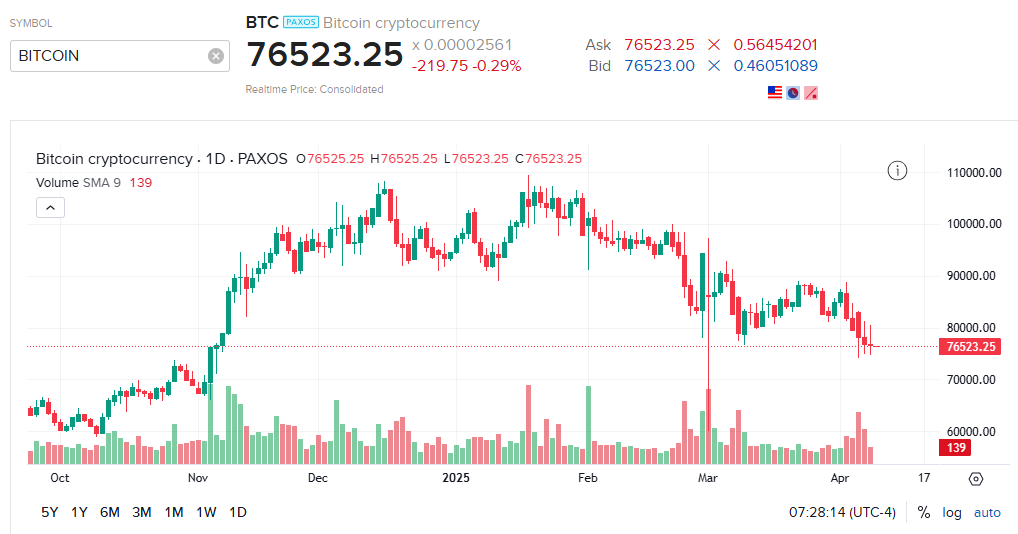
Overall, Interactive Brokers continues to be one of the cheapest places to trade anything. You can see in the below cost comparison below Coinbase and eToro execution costs are very low.
There are several benefits to trading crypto on IBKR: Consolidated platform: Clients can access a wide range of global investment products, including cryptocurrencies, on a single sophisticated trading platform, eliminating the need for multiple platforms. Competitive pricing: Cryptocurrency commissions are low at 0.12% – 0.18% of trade value, depending on monthly volume, with a minimum of $1.75 per order. There are no added spreads, markups, or custody fees. Currency conversion: Clients can convert GBP or other currencies to USD (the denomination for cryptocurrencies on the platform) at tight spreads as low as 1/10 of a PIP. Efficient portfolio management: Financial advisers can easily allocate a percentage of client assets to cryptocurrencies and manage their clients’ portfolios more efficiently. However, it’s important to note that cryptocurrency is still a very high-risk investment and even tough the costs of trading are lower, there is a high possibility that crypto could become worthless. Interactive Brokers (U.K.) Limited is registered with the Financial Conduct Authority as a crypto assets firm under the relevant regulations. |
||||||||||||||||||||||||||||
 |
GMG Rating |
Customer Reviews |
Cryptocurrencies 400 |
Commission 0% |
Features:
|
Crypto.com Expert ratingOur expert rating is the average of the areas listed here, each scored out of 5 by our team.4.2Very good Our experts have rated Crypto.com across five key areas of our review framework.
Pros
Cons
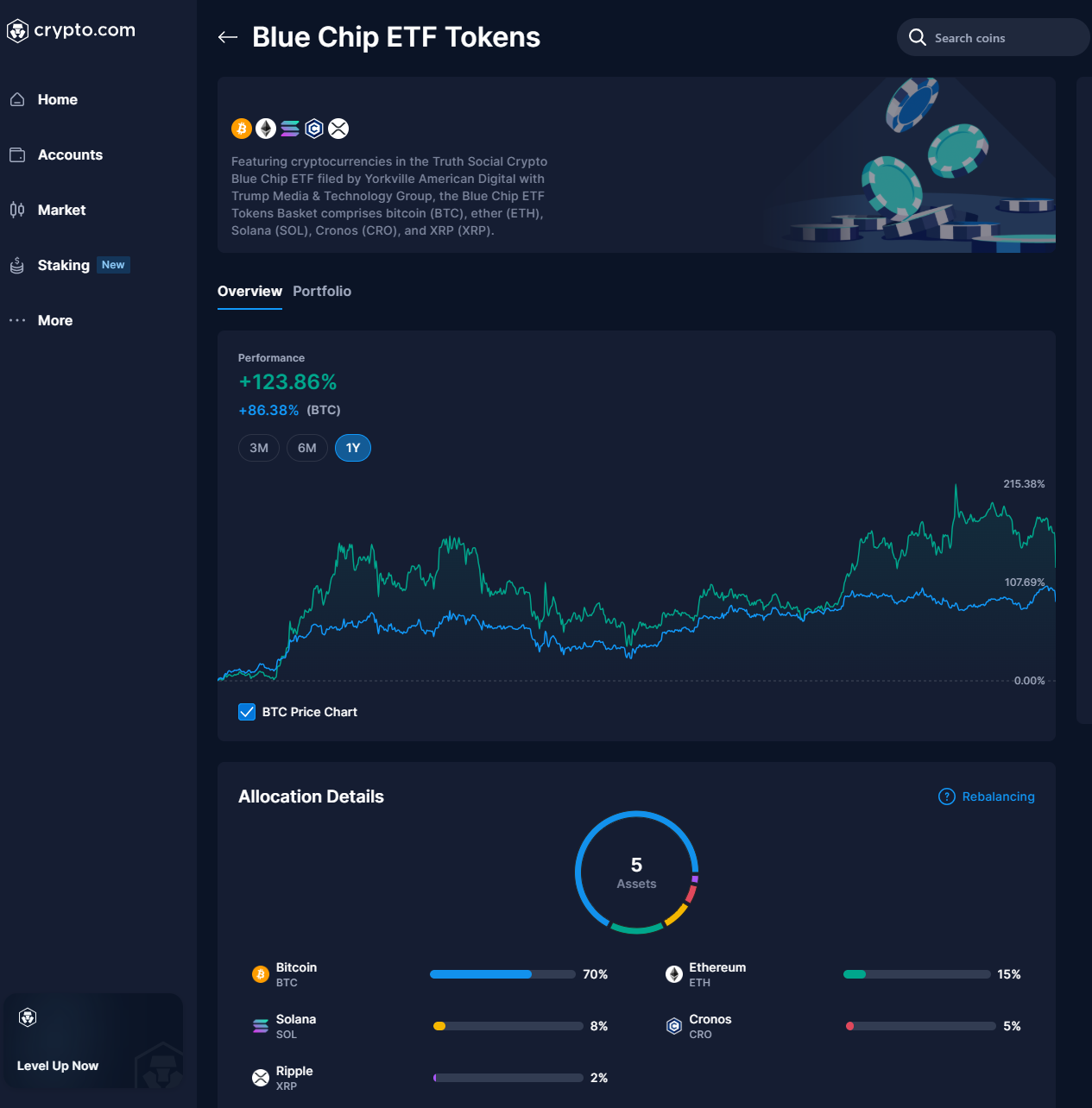
Our verdictCrypto.com offers a broad crypto trading experience with competitive maker-taker fees and a wide GBP market selection, avoiding FX charges. The app is easy to use with limit orders and curated baskets like Blue Chip Tokens for diversification. However, customer support is largely automated, research tools are limited, and fees rise quickly after free deposits. SummaryPricing – There is a 2.99% fee for using a credit or debit card to deposit funds which is quite steep. You can use Open Banking but only with ClearBank and BCB. There is also a withdrawal fee of £1.90 with a minimum amount of £70. A maker-taker model applies so if you are providing liquidity through limit orders your rates will be lower than if you are dealing at market. Crypto commission rates typically start from 0.25% to 0.08% for makers and 0.5% to 0.18% for takers. If you join the Level Up program, and pay a monthly subscription you can get these trading fees reduced and earn 1.5% cash on deposit too, but rates are higher than that in the bank. Market Access – You can trade around 150 cryptocurrencies in GBP, which is great because you don’t get stung with USD FX charges where you are required to convert GBP into USD. You can also trade crypto baskets, which is a collection of cryptocoins all lumped into one. For this review, I bought £100 worth of the Blue Chip ETF Tokens baskets, which is mainly Bitcoin with a few others added in like Ethereum, Solana, Cronos and Ripple. Mainly because I like diversification, and I’m only buying crypto for the sentiment value and that basket was the best performing over a year, and judging from the charts on Crypto.com seems to consistently outperform Bitcoin over 3 months, 6 months and a year. You can also set the basket to rebalance to keep the ratios right.
App & Platform – Crypto.com’s website is simple to use, almost too simple if I’m honest, I’d like to see more bid/offer spreads on the pricing pages. The Crypto.com app is better as you can work limit orders (as opposed to just market, so it’s cheaper). Customer Service – As far as I found the support is mainly a bot, which did answer my questions quickly. When I asked the customer service bot about this it couldn’t quite understand the question. There is no telephone number, which is not surprising for a crypto exchange. Research & Analysis – On the crypto.com app there is an “Insights” tab, which is not available on the website, which gives you crypto news as well as signals. Where you can trade from the feed, however, I’d take those with a pinch of salt and do your own research before deciding what to buy and sell. Don’t invest unless you’re prepared to lose all the money you invest. This is a high-risk investment and you should not expect to be protected if something goes wrong. |
||||||||||||||||||||||||||||
 |
GMG Rating |
Customer Reviews |
Cryptocurrencies 600+ |
Commission 0.00% – 2.49% |
Features:
|
Bitpanda Expert ratingOur expert rating is the average of the areas listed here, each scored out of 5 by our team.4.2Very good Our experts have rated Bitpanda across five key areas of our review framework.
Pros
Cons
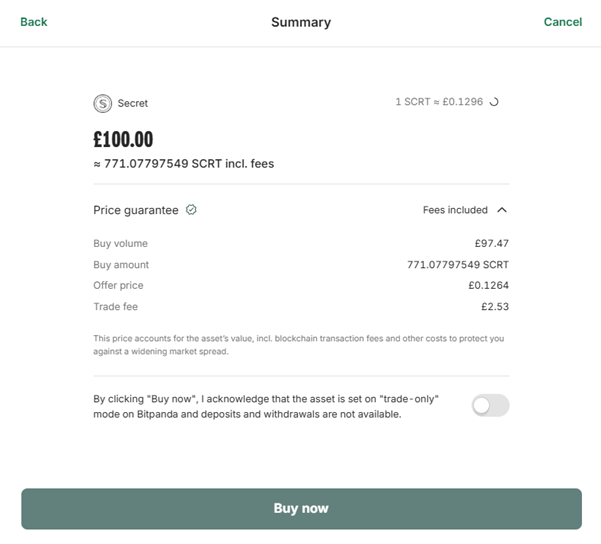
Our verdictBitpanda is a European investment platform founded in 2014 in Vienna, Austria. Originally built as a simple way to buy Bitcoin, in Europe it has expanded to offer trading in cryptocurrencies, ETFs, stocks, precious metals, and commodities. The company is privately owned, with founders Eric Demuth, Paul Klanschek, and Christian Trummer still actively involved. Bitpanda now claims several million users across Europe. Is Bitpanda any good?In this expert review we put Bitpanda to the test with real money and buy some crypto from the UK to find out if Bitpanda is any good. Pricing I was able to deposit GBP free via debit card which makes it cheap to get started (compared to other UK crypto platforms that are currently charging 2.9% on debit card deposit). When buying actually cryptocurrency, I was charged £2.52 when I bought £100 worth of crypto for this review so you can assume the commission rates are 2.53%, but Bitpanda say their fees range from 0.99% to 2.49% – so assume the smaller (less liquid) the cryptocurrency the higher the fees will be. Bitcoin for example should be 0.99%.
Market Access Bitpanda offer one of the widest ranges of cryptocurrencies with over 600 assets available on the platform. There is also a good selection of digital assets for staking and earning rewards of up to 29.82%, but when I checked the highest paying one, Coreum, it was unavailable for staking. The second highest was Secret, paying 13.28% so I bought £100 worth and staked all of it. As with all crypto, I fully accept that I may lose all my money, but it might, just might pay off in the future so I’m always happy to risk some fun money on it. App & Online Platform Simple to use for beginners, but for larger traders not having access to level-2 pricing from a crypto exchanges means you can’t check liquidity. But if you are just buying some crypto to tuck it away and see what happens, it’s straightforward. However, it did take a few moments for my funds to be allocated to my account before I could buy some crypto. It kept saying “Fiat wallet could not be found”. Customer Service When I went to the my account tab to try to find my Fiat Wallet, the Contact Support link was greyed out. But when I managed to copy and paste “Fiat wallet could not be found” there was an article, but it didn’t really help. It just told me the steps I’d been through. No phone support, but I was able to submit a ticket to help resolve the issue. The system had auto resolved it before I got a response though. Research & Analysis There are some educational guides on the main website. But, Bitpanda does not have any news flow or analysis on the site, and for altcoins like Secret, there are no descriptions of what it does other than the risk warning. I’d like to see more information in the “About” section. Can Bitpanda Be Trusted? Bitpanda is generally considered a trustworthy and reputable platform within Europe. You can cash out to your bank easily (withdrawals to SEPA accounts typically take 1-3 business days), although some UK users report longer times due to banking friction. Bitpanda offers zero deposit and withdrawal fees on all payment methods. Bitpanda is not a “get-rich-quick” crypto app, rather, it’s a balanced investing platform offering crypto, stocks, ETFs, and commodities within a regulated environment. Is Bitpanda Available in the UK? Yes, Bitpanda is available in the UK, but with some limitations. You can open an account, deposit GBP, and buy assets. However, some crypto-related services (like derivatives) are unavailable.. Bitpanda supports GBP and EUR deposits via bank transfer, debit card, and SEPA. UK users can also pay with Visa or Mastercard, though fees vary depending on method. While most UK banks now allow crypto transactions, some (e.g. HSBC and Nationwide) still block payments to certain platforms. Bitpanda, however, usually works fine with major banks like Barclays and Monzo. I had no problems depositing funds from the Natwest Mastercard (debit card). Bitpanda is a legitimate alternative for UK users who want a wide range of digital assets. Is Bitpanda Regulated in the UK? No, in the UK Bitpanda is registered (not Regulated) by the FCA to provide cryptoasset services. Ffunds are not protected by the FSCS and you will not have access to the financial ombudsman service if anything goes wrong. You can check on Bitpanda’s status in the UK here: https://register.fca.org.uk/s/firm?id=0014G00002UyCuqQAF Bitcoin and crypto are not illegal in the UK, and holding or trading them on Bitpanda is perfectly lawful, though users should understand that cryptoassets remain largely unregulated and high-risk. Who Owns Bitpanda? Bitpanda remains a privately held company co-founded by Eric Demuth (CEO), Paul Klanschek, and Christian Trummer. It has raised significant funding from investors including Valar Ventures (backed by Peter Thiel), positioning it among Europe’s fintech unicorns. In the UK, Bitpanda makes money through trading spreads and fees and its savings plans and staking services. |
||||||||||||||||||||||||||||
 |
GMG Rating |
Customer Reviews |
Cryptocurrencies 395 |
Commission 0.02% – 0.04% |
Features:
|
Kraken Expert ratingOur expert rating is the average of the areas listed here, each scored out of 5 by our team.
Pros
Cons
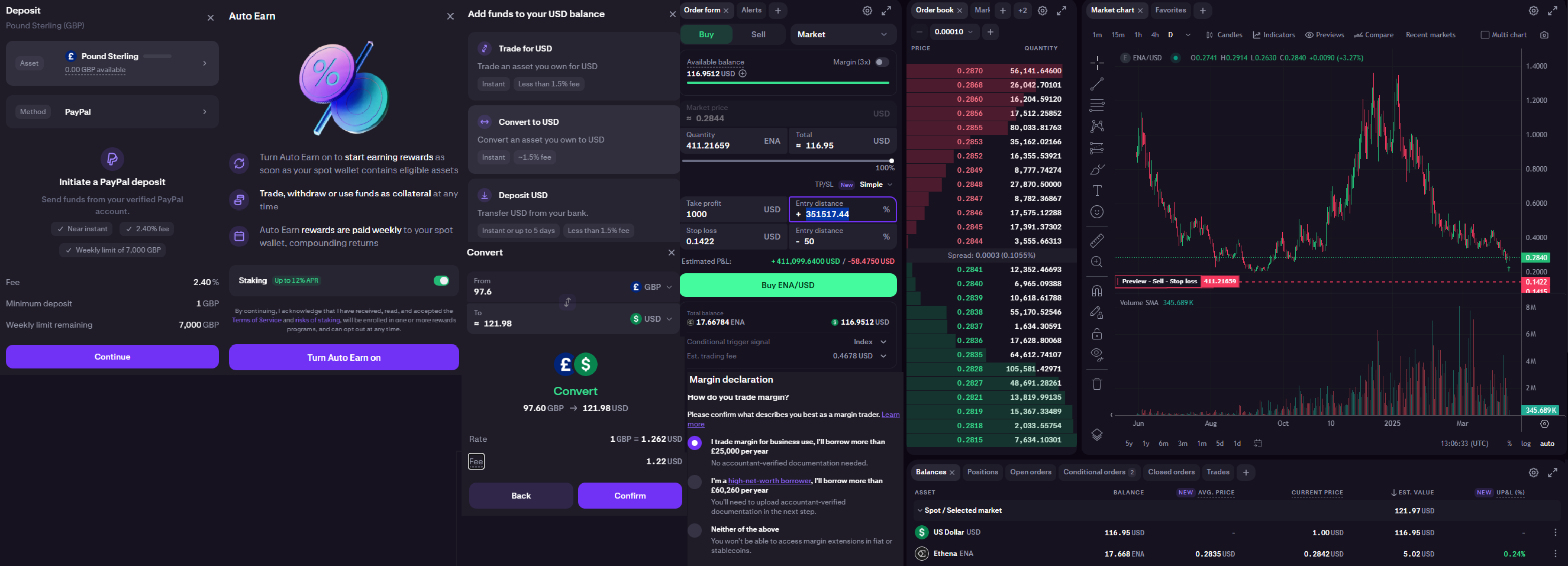
Our verdictKraken is one of the world’s largest cryptocurrency firms and recently launched a “Kraken Pro” platform. When you’ve signed up to Kraken, you can access Kraken Pro with no extra charges. The new Kraken Pro trading platform brings all of the firm’s services together in one place. It is designed to be accessible to all traders, be they retail, professional or even institutional clients. Is Kraken Good for Cryptocurrency?The Test: For now, this is a quickfire test of just the Kraken Pro platform because I have spent all day testing crypto platforms and I’m knackered.. I think my bank would be a little concerned if I used my account for any more crypto deposits today, so I’m funding my Kraken Pro account via PayPal, which comes with a 2.4% fee, but that’s OK because I’m only putting in £100. You’ll see why in a minute. If you are depositing more, it would be sensible to use Plaid Open Banking, because it’s cheaper. I opened my Kraken account years ago, so I didn’t have to wait for the 24-hour cooling off period. Whilst I waited for my funds to be processed, I turned on the Auto Earn options. This means that whatever eligible crypto I own, I can stake it automatically (and also use it as collateral) and earn rewards of up to 12%, which are paid weekly. If I’m honest, I’m unconvinced by the whole “crypto as an investable asset class” idea because I think crypto is mainly driven by sentiment. But that doesn’t mean there is opportunity. So when deciding what cryptocurrency to buy on Kraken (there are over 300 of them) I turned to the most rampant ramping source possible, TikTok. I Googled how to search for the most popular cryptos on TikTok and the first video was of a teenager very convincingly talking about the best cryptos to buy during a market crash. I decided to follow his first tip – Ethena. He was going through his “top picks” with “massive discounts right now” but didn’t say what discount it was or even what the fiat value should be. But as he has 1.2 million followers I assumed that some other people may be listening to him and also buying the same coins. Which would mean that sentiment may drive them up. The first one he mentioned was Ethena at an apparent 73% discount. Which looked like it had been ramped towards the end of 2024 but was now trading on what technical analysts would call “support” although I don’t think that is necessarily relevant here. But first I’d have to convert my GBP into USD, which is instant, but comes with a 1.5% ($1.22) fee. So my £100 is now $121.98 which at the GBP-USD mid-rate of 1.2804 is £78.10. So I’m already down 22%, and I haven’t even lost any money on crypto yet! This is because of the conversion rate that Kraken applies, as crypto is generally priced in USD. There are quite a few order options when you buy, which is great if you’ve got size but I don’t so it’s pointless working an iceberg, which pecks away at the market bit by bit of setting a limit below, so I just went balls in at the market. But not that deep because I put a stop loss in 50% below. I have zero expectations of this growing gradually, but rather hoping for some sort of social media pump and dump to drive it higher so put my take profit in 350,000% higher, hoping to nick $1,000 profit if that happened. Either way it meant I didn’t have to add Ethena to any watch list to keep track of it. 🤞 You can actually trade that coin on 3x margin, but I’m not daft enough for that. T-20 trading AIM stocks was fun enough and at least they had fundamental value, well some of them at least. I think when it comes to crypto, you pays your money, you takes your chance. What Does Kraken Pro Look Like?
What is Kraken Pro Like to Use? You can configure Kraken Pro, customising the layout to suit your trading style, using the platform’s trading and data modules as required, inside the drag-and-drop desktop interface. Kraken Pro’s functionality is more suited to experienced users. You can also switch seamlessly between trading and staking products and services. You can track and monitor all of your positions and performance from one clear and consolidated portfolio view. All of which is powered by real-time data. The platform allows you to search for the top gainers and losers and the most actively traded and newly listed cryptocurrencies. That comes alongside a dedicated charting package that lets you compare four markets simultaneously and apply a range of indicators to those instruments. At the same time, you can monitor live order books and stream time and sales data to keep up to speed with market trades. Kraken Pro’s user interface is intuitive to navigate around and use. You can drill down to surface a token or coin from the platform’s markets view, which displays a heat map of the available asset classes. So, for example, clicking on the heatmap icon for layer 1 protocols brings up tokens such as NEAR. Clicking on that icon brings up a chart and an order entry box, alongside the order book in the NEAR/USD pair. There is a series of how-to guides and walk-through videos. As well as information on order types and dedicated API documentation. Kraken also prides itself on answering and attempting to resolve support queries quickly. Who is Kraken? Kraken was founded in San Francisco back in 2011. The firm operates in more than 190 countries and is regulated in various jurisdictions, including the US, UK, Canada, Australia and Europe. Kraken is one of a select group of businesses authorised by the UK Financial Conduct Authority (FCA) to offer cryptoasset services in the UK. Kraken offers trading in more than 300 individual cryptocurrencies and crypto pairs. Kraken’s trading volume in 2024 was more than $207 billion and it has more than 9 million unique clients. Despite recent market volatility, cryptocurrencies seem to be enjoying a new lease of life, and there is growing interest among both professional and retail traders. That is perhaps driven in part by a change of heart among US regulators and moves by the White House to establish a US national cryptocurrency reserve. It may take some time for that thaw to spread across the Atlantic, but dedicated cryptocurrency enthusiasts haven’t ever paid much attention to national borders. Kraken UK FCA-Authorised as an Electronic Money Institution Kraken was one of the first crypto exchanges in the UK to offer GBP-BTC trading, in 2014, and has been authorised as an e-money institution by the UK’s FCA. Whilst this doesn’t mean you get the same protections as if you were buying shares on a stock exchange, it does mean that Kraken is one of a handful of Bitcoin brokers that the regulator has deemed responsible enough for UK crypto investors. It’s worth noting, though, that crypto is largely unregulated in the UK. Kraken currently offers 300+ cryptocurrencies in the UK and hopes to make it easier than ever for the 7 million crypto traders in the UK to invest in digital assets. In early 2025, Kraken received a MiFID regulatory licence to buy and sell crypto derivatives within the European Union (EU). The cryptocurrency exchange gained the licence through buying a Cypriot investment firm which had recently received the licence from the Cyprus Securities and Exchange Commission (CySEC). The move allows Kraken to offer crypto derivatives products to traders resident in the 27 EU countries, aiding its plans to expand across the continent. The buyout came after Kraken had acquired Crypto Facilities, a UK FCA-registered crypto futures platform, in 2019. The acquisition of the new licence follows the firm’s launch of Kraken Pay in January 2025. This service allows users to send payments internationally using more than 300 cryptocurrencies and fiat currencies. In December 2024, rival exchange Coinbase enabled Apple Pay, allowing for immediate conversions between fiat currencies, such as dollars and pounds, and cryptocurrencies. FCA data shows the percentage of people in the UK who own some crypto rose to 12% in 2023 from 10% in 2022. The average value held rose from £1,595 to £1,842 over the same period. In 2024, the financial watchdog reiterated its rules against selling cryptocurrency derivatives such as exchange-traded funds (ETFs) to retail investors in the UK. |
||||||||||||||||||||||||||||
 |
GMG Rating |
Customer Reviews |
Cryptocurrencies 150 |
Commission 3.5% |
Features:
|
|
Don’t invest unless you’re prepared to lose all the money you invest. This is a high-risk investment and you should not expect to be protected if something goes wrong. Take 2 mins to learn more

Richard is the founder of the Good Money Guide (formerly Good Broker Guide), one of the original investment comparison sites established in 2015. With a career spanning two decades as a broker, he brings extensive expertise and knowledge to the financial landscape.
Having worked as a broker at Investors Intelligence and a multi-asset derivatives broker at MF Global (Man Financial), Richard has acquired substantial experience in the industry. His career began as a private client stockbroker at Walker Crips and Phillip Securities (now King and Shaxson), following internships on the NYMEX oil trading floor in New York and London IPE in 2001 and 2000.
Richard’s contributions and expertise have been recognized by respected publications such as The Sunday Times, BusinessInsider, Yahoo Finance, BusinessNews.org.uk, Master Investor, Wealth Briefing, iNews, and The FT, among many others.
Under Richard’s leadership, the Good Money Guide has evolved into a valuable destination for comprehensive information and expert guidance, specialising in trading, investment, and currency exchange. His commitment to delivering high-quality insights has solidified the Good Money Guide’s standing as a well-respected resource for both customers and industry colleagues.