

Corporate credit cards can streamline your business buying process. Company credit cards can ensure employees, spending money each day, avoid the hassle of submitting expense claims by offering them a credit card registered to your business. You then repay the balance once each month.
| Name | Logo | Cash Back | APR | GMG Rating | Customer Reviews | CTA | Feature | Expand |
|---|---|---|---|---|---|---|---|---|
 |
Cash Back 1% |
APR 14-65% APR |
GMG Rating 4.5★★★★★★★★★★ |
Customer Reviews 1.0★★★★★★★★★★(Based on 3 reviews) |
Regulation:
|
Capital on Tap Expert ratingOur expert rating is the average of the areas listed here, each scored out of 5 by our team.4.5★★★★★★★★★★Excellent Our experts have rated Capital on Tap across four key areas of our review framework.
Pros
Cons
Our verdictCapital on Tap is a UK-based finance provider that focuses on business credit cards aimed at small and medium-sized enterprises (SMEs). It was founded around 2012 in London, and over time it has grown to support a large number of businesses across the UK with credit-line solutions rather than traditional fixed-term business loans. Rather than lending with a fixed repayment schedule over months or years, its product allows businesses flexibility in spending, repayment, and reuse of credit. The core idea is to help businesses manage cash flow, purchase costs, expenses etc., using revolving credit, with rewards and perks tied to card usage. How does Capital on Tap work?When a business applies, Capital on Tap assesses its creditworthiness, turnover, trading history, business structure etc., and decides a credit limit it is willing to offer, which for eligible businesses can be up to £250,000. Once approved, the business gets a credit card (often quick and digital first, then physical). The card can be used to purchase supplies, pay expenses, manage day-to-day outgoing costs. There is usually an interest-free period (for example up to 56 days) for purchases, after which interest applies to outstanding balances. There are also features like cashback or rewards, depending on the version of the card. Other perks include integration options, relatively straightforward application process, and tools for security (e.g. fraud protection). The terms are variable depending on the business’s risk, the credit limit, and how much and how often the card is used. Is Capital on Tap legit Yes, Capital on Tap appears to be a legitimate company. It is registered in England & Wales, and its business credit card is regulated. It has a strong and generally positive reputation: there are thousands of reviews on Trustpilot with high average ratings, and independent review sites like Forbes and Rangewell have written about its business credit card product, noting its strengths and trade-offs. There do not appear to be red flags in the basic checks. Is Capital on Tap safe? Overall, yes, it offers many of the protections you would expect from a well-established financial service. For example, its credit cards are part of the Visa scheme, which gives “Zero Liability” protection (you’re not responsible for fraudulent or unauthorised transactions) under certain conditions. There is fraud protection, dispute mechanisms for transactions you didn’t make, virtual cards in some cases, and tools to monitor activity. They also provide guidance on avoiding phishing / scams, verifying communications, and keeping account information secure. That said, as with any revolving credit / card product, the risk lies in how it’s used: carrying balances, late payments, high interest after grace periods etc. If a business doesn’t manage repayments well, costs can escalate. Does Capital on Tap do a hard inquiry? Capital on Tap mostly uses a soft credit check when you apply for their business credit card. That means applying won’t affect your personal credit score initially. However, they note that a hard inquiry may occur in certain cases—especially if there is a personal guarantee or if further checks are needed during or after the application process. Does Capital on Tap report to personal credit? Capital on Tap generally does not report routine business credit activity to your personal credit report—such as regular payments made on time—unless something goes wrong. Late payments, defaults, or other negative behaviour under a personal guarantee can show up on your personal credit report. Does Capital on Tap require personal guarantee? Yes, Capital on Tap often requires a personal guarantee from business owners or directors. The card agreement includes a personal guaranty, especially when the business or its credit history does not alone satisfy their risk criteria. Signing a personal guarantee means you agree to be personally liable if the business cannot repay. |
||
 |
Cash Back 1% |
APR 14.13% |
GMG Rating 4.8★★★★★★★★★★ |
Customer Reviews 3.0★★★★★★★★★★(Based on 1 review) |
Regulation:
|
The Funding Circle Cashback Business Credit Card offers UK SMEs generous rewards with low costs. It gives 2% cashback for six months (up to £2,000), then 1% unlimited cashback on all spending. There are no annual or monthly fees, and purchases get up to 42 days interest-free if paid in full. Credit limits can reach £250,000, making it ideal for high-spending firms. It’s accepted anywhere Visa is and applying won’t affect your credit score if you’re a limited company. Overall, it’s a simple, flexible way to earn cashback on everyday business expenses without ongoing costs.
Funding Circle Expert ratingOur expert rating is the average of the areas listed here, each scored out of 5 by our team.4.8★★★★★★★★★★Excellent Our experts have rated Funding Circle across four key areas of our review framework.
Pros
Cons
Our verdictFunding Circle is a UK-based fintech business lender focused on providing finance to small and medium-sized enterprises (SMEs). It was founded in 2010 and has since helped many thousands of UK businesses access business loans, asset finance, and newer products like FlexiPay, business credit cards, etc. It operates with institutional backing rather than relying mainly on peer-to-peer individual investors, matching businesses needing capital with funds at scale. How does Funding Circle work?Funding Circle offers fast online business loans by matching SMEs with institutional lenders. After a quick digital application and credit checks on the business and directors, approved borrowers get fixed-rate loans (6 months to 6 years) with funds in days, personal guarantees required, and no early repayment fees. Are Funding Circle loans secured? Yes, Funding Circle offers both secured and unsecured loans. Unsecured loans do not require business assets as collateral, while secured loans involve using business assets (machinery, equipment, property etc.) or through asset finance via trusted partners. Secured loans tend to allow for larger borrowing amounts (up to about £5 million in some asset-finance or secured-loan cases) and often have lower interest rates, because there’s collateral which reduces lender risk. Does Funding Circle conduct a credit check? Yes, they do credit checks. When you apply, Funding Circle will perform assessments that include both business creditworthiness and often personal credit checks on business owners or directors, especially where personal guarantees are involved. Initially, checking eligibility or getting a quote may involve a soft credit check (which doesn’t impact your credit score), but if you accept the loan offer, a full hard credit check is likely. Does Funding Circle have a minimum credit score? Funding Circle does not always publish a strict minimum personal credit score threshold that every applicant must have, but credit history is a factor in risk banding and loan decision. Poor credit could lead to higher interest rates or possibly rejection. Also, businesses with adverse credit events (for example directors involved in liquidated companies) may have difficulty qualifying. So while there is no clearly published “minimum credit score” in all cases, meeting good credit criteria improves eligibility. Does Funding Circle require personal guarantees? Yes. Funding Circle requires personal guarantees for all its business loans (term loans etc.) and for lines of credit over certain sizes. The guarantees mean that owners or directors may be personally liable if the business fails to repay. This helps lenders mitigate risk and may enable more businesses to be approved. How does Funding Circle FlexiPay work? FlexiPay is a line-of-credit product by Funding Circle designed to help businesses manage cash flow by spreading certain payments over short-term instalments (1, 3, 6, 9 or 12 months). You can use it to pay bills, suppliers, invoices etc.; Funding Circle pays upfront, then you repay over the chosen period. There’s no interest per se, but a fee per transaction and a flat fee, rather than ongoing interest rates. It acts similarly to a revolving facility: once paid down, you can reuse the credit (subject to eligibility). Also, applications for FlexiPay allow limited companies or LLPs to check eligibility without affecting credit score. Is Funding Circle a bank? No. Funding Circle is not a bank. It is a fintech lender / platform. It is regulated, but it does not take deposits like a bank; instead, it offers finance products by lending or arranging lending to businesses, and sometimes connects businesses to investors or institutional capital. What happens if you can’t pay a Funding Circle loan? If you can’t make payments on a Funding Circle loan, the company has a process. First, you are urged to contact them as soon as possible to discuss options. If repayments are missed, then because many of their loans involve personal guarantees, the guarantors (directors etc.) may become personally liable. For secured loans, the lender may enforce security by selling business assets pledged. Also, there may be consequences on credit or legal enforcement. |
What is a business credit card?
Business credit cards can be powerful tools for managing cash flow, tracking expenses, and earning rewards. Whether you’re a freelancer, sole trader, or SME owner, the right business card can offer value through:
- Cashback
- Travel perks
- Low-cost borrowing
With more providers competing in the space, there are excellent options available for companies of all sizes.
How to get a business credit card?
Who is eligible for a business credit card in the UK?
In the UK, eligibility for a business credit card depends on a few basic requirements. You need to be operating a business, which can include limited companies, partnerships, sole traders, freelancers, or contractors. You don’t necessarily need to be VAT-registered or have a large turnover, but you must be able to show that you are engaged in commercial activity.
Applicants must be at least 18 years old and permanently reside in the UK. Most providers also require you to have a UK-based business bank account. In some cases, especially for sole traders, a personal account that handles business income may be accepted.
Lenders will typically assess both your personal and business credit history. Newer businesses with little or no credit history may still qualify, although they might receive lower credit limits or higher interest rates. You’ll usually need to provide some proof of income or trading activity, such as recent bank statements, invoices, or tax returns.
Only those authorised to act on behalf of the business—such as company directors, owners, or designated managers—can apply for and manage a business credit card. If you meet these conditions, you’re generally eligible to apply for a business credit card in the UK.
What is the best business credit card for small businesses?
Capital on Tap is a standout business credit card for many small business owners because it combines generous features, flexibility, and useful tools in a relatively low-hassle package. First, you earn uncapped cashback (1%) on all purchases, giving you value on every pound you spend.
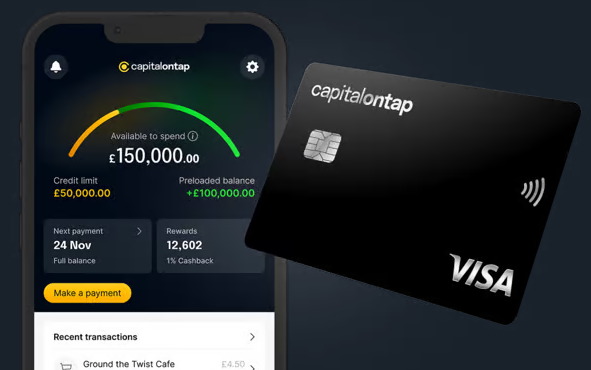
Capital on Tap also has no foreign transaction fees for small businesses, which is a big plus if your business spends overseas or with international suppliers.
Credit limits are competitive, depending on your business’s profile, you could get up to £250,000, which helps with cash-flow, bulk purchases or unexpected costs.
Managing the card is easy via an online dashboard & mobile app, with real-time tracking, employee cards, spending controls, and integrations with accounting tools.
What is the best business credit card for cash back?
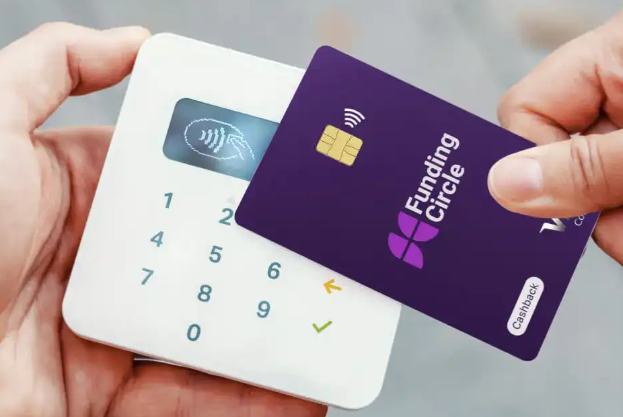
If you’re looking for the best business card for cashback, Funding Circle’s Cashback card offers a compelling deal right out of the gate. For the first six months after approval, you’ll earn 2% cashback on all spending, up to a ceiling of £2,000.
With Funding Circle, if you spend £100,000 in those six months, you’ll hit the cap — but for many smaller businesses even £20-40k of needed expenses will generate a nice reward. After that welcome period, the card shifts to a steady 1% cashback with no cap.
There are no monthly or annual fees, so your net return isn’t eaten by upkeep costs.
You also get up to 42 days of interest-free credit if you pay off your balance in full each billing cycle.
The credit limit is very high too, up to £250,000, giving room for big purchases like inventory or technology, alongside routine spend.
Which business credit card has the lowest APR?
Some of the lowest-APR business credit cards in the UK include the Capital on Tap Business Credit Card, which offers a representative 14.4% variable APR with no annual fee and 1% uncapped cashback. The Lloyds Bank Business Credit Card comes in at around 15.96% variable APR, and also includes up to 56 days interest-free on purchases. The Metro Bank Business Credit Card is around 18.9% variable APR, with no annual fee and no foreign transaction fees in Europe.
When choosing a business credit card, it’s easy to focus on rewards or cashback — but if you carry a balance, the APR (Annual Percentage Rate) is one of the most important factors to consider. APR represents the true yearly cost of borrowing on a credit card, including interest and standard fees. A lower APR means you’ll pay less interest if you don’t clear your balance in full each month, helping to keep your business costs under control.
Is getting a business credit card a good idea?
Getting a business credit card can be a good idea, but only if it’s used strategically and responsibly. While just 11% of small and medium-sized enterprises used business credit cards in 2022, usage is rising again post-pandemic as companies turn to more flexible funding tools. Around 50% of small businesses cite cash flow management as a key reason for using credit cards, and 87% value the convenience they offer for everyday expenses. Rewards like cashback and Avios also add value, especially for businesses with consistent monthly spending.
Pros
- Helps manage cash flow
- Offers rewards and discounts
- Simplifies expense tracking
Cons
- High interest if unpaid
- Risk of overspending
- Approval not always guaranteed
However, these cards are not without risks. Business debt in the UK rose by 61% in 2023, with interest rates on business credit cards averaging around 26%. Delinquency rates increased by 35% in the first half of 2023, indicating that more SMEs are struggling to make payments on time. While 97% of medium-sized companies clear their balances, smaller businesses and sole traders are more likely to carry debt. The result is a financing tool that can either help businesses grow or weigh them down—depending entirely on how it’s used. For most businesses, the key is to treat the card as a short-term tool, not a long-term borrowing solution.
Business Credit Card FAQs
The American Express Business Gold Card stands out for businesses that want to earn travel rewards. It offers 1 Membership Rewards point per £1 spent, with the ability to transfer points to multiple airline and hotel partners. The first year is fee-free, and the welcome bonus of 20,000 points can be valuable for companies with regular travel or ad spend.
For businesses looking to minimise costs, the Metro Bank Business Credit Card offers one of the lowest interest rates in the market at 14.9% with no annual fee. It’s ideal for companies that don’t need rewards but want a reliable, low-cost card for managing expenses or short-term borrowing.
Business credit cards must be used for company-related expenses. The cardholder is typically the business owner, director, or authorised employee. While rewards earned through business spend technically belong to the business, the director or finance team decides how they are used—whether for reinvestment, travel, or staff incentives. Personal use of a company credit card without permission may breach company policy or even be considered misuse.