
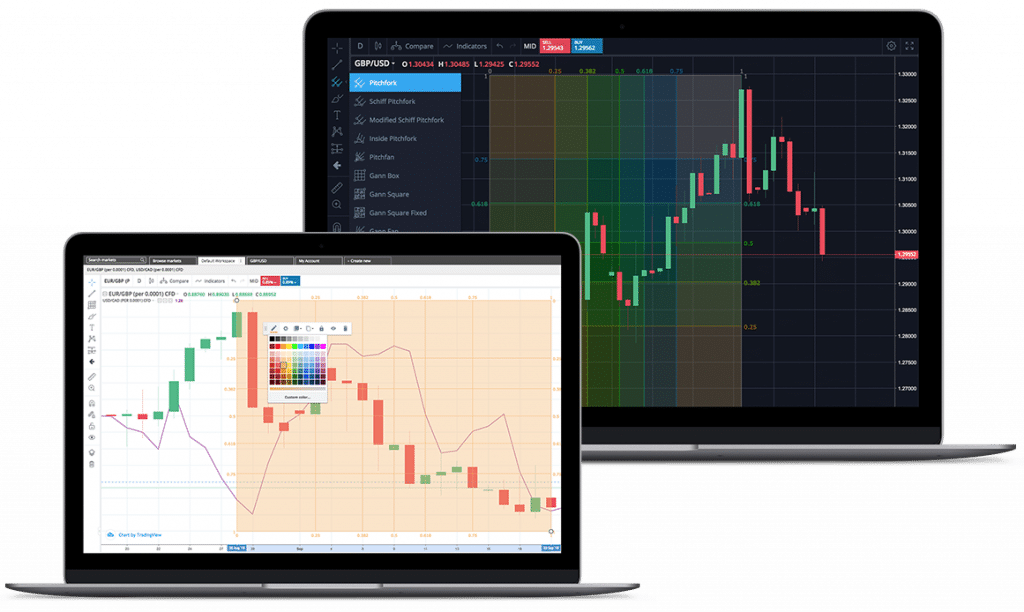
Gain Capital’s spread betting and margin trading business City Index made an announcement earlier this week, concerning changes to the company’s charting packages.
The changes that spread betting broker City Index are going to make may sound low key, but they may have some interesting ramifications and highlight the inflexibility inherent in some very popular trading platforms.
After consulting with its customers City Index are to amend the way that they calculate the end of day candle, on daily charts. Which will now be based on a 5 pm New York time close, rather than the previous arrangements, that worked on a close at midnight UTC.
UTC is an international standard for the coordination of clocks around the globe, as a point of interest, New York time is currently 4 hours behind UTC time.
What these changes mean to clients of City Index is that they will now see five daily candles in a chart, drawn over a five-day period. Bringing their chart display in line with the timing of daily trading sessions, thus making those charts easier to interpret and trade from.
What’s more, City Index is backdating the new display method over five years’ worth of historical data for daily, weekly and monthly time frames etc. Though there will be no changes for the historical data within intraday time frames.
These changes will happen across City’s range of proprietary trading and charting platforms, but they will not be available on the MT4 platform. Indeed, one of the criticisms of MT4 has been its inability to accommodate these types of changes. MT4 is governed in many its operations by its own server time, something that has frustrated chartists and those who code EA’s and other algorithmic trading tools, for many years.
It remains to be seen if algorithmic traders using City Index’s proprietary platforms will need to adjust their coding to take account of the new end of day charting protocol, but given that City have made these changes based on customer feedback we must assume that they feel that the positive effects of the new set up will outweigh any negatives.
In an increasingly competitive margin CFD trading landscape, small changes such as these can help a broker to differentiate themselves from their peers making them a potentially more attractive proposition to both prospective and existing clients.

Richard is the founder of the Good Money Guide (formerly Good Broker Guide), one of the original investment comparison sites established in 2015. With a career spanning two decades as a broker, he brings extensive expertise and knowledge to the financial landscape.
Having worked as a broker at Investors Intelligence and a multi-asset derivatives broker at MF Global (Man Financial), Richard has acquired substantial experience in the industry. His career began as a private client stockbroker at Walker Crips and Phillip Securities (now King and Shaxson), following internships on the NYMEX oil trading floor in New York and London IPE in 2001 and 2000.
Richard’s contributions and expertise have been recognized by respected publications such as The Sunday Times, BusinessInsider, Yahoo Finance, BusinessNews.org.uk, Master Investor, Wealth Briefing, iNews, and The FT, among many others.
Under Richard’s leadership, the Good Money Guide has evolved into a valuable destination for comprehensive information and expert guidance, specialising in trading, investment, and currency exchange. His commitment to delivering high-quality insights has solidified the Good Money Guide’s standing as a well-respected resource for both customers and industry colleagues.