

Inflation is more than just a higher cost of living, it influences interest rates, investment returns and the value of every pound you save. In this analysis, we examine why inflation could remain stubbornly high, how it affects different asset classes, and where investors may find opportunities if price pressures persist.
Is inflation too high?
If you were to hazard a guess how much purchasing power has been lost since 2020, what number would you come up with? 10%, 20% – or more?
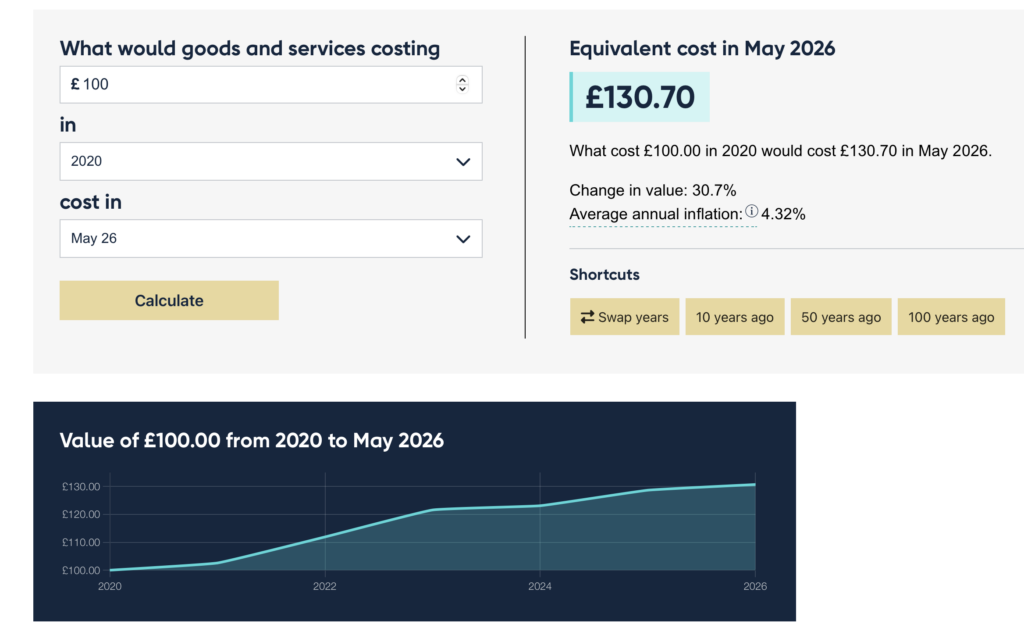
Just the other day, I came across this interesting “Inflation Calculator” on BoE’s website. I did a quick simple check. What required £100 to buy in 2020 now costs a staggering £130.70 That’s a chunky 30% inflation right away (see below).
And that is only an average figure.
There are many goods or services that may have gone up more than this. Think the newly-imposed VAT on private school tuition fees when Labour came to power. Cost immediately rose 20%. On top of this, parents have to fork out the year-to-year general tuition cost increment.
Meanwhile, energy costs have also increased substantially in the country over the past few years. The Ukraine conflict in 2022 set fire under wholesale energy prices and fed inflation into every energy application. This impact is still rippling today.
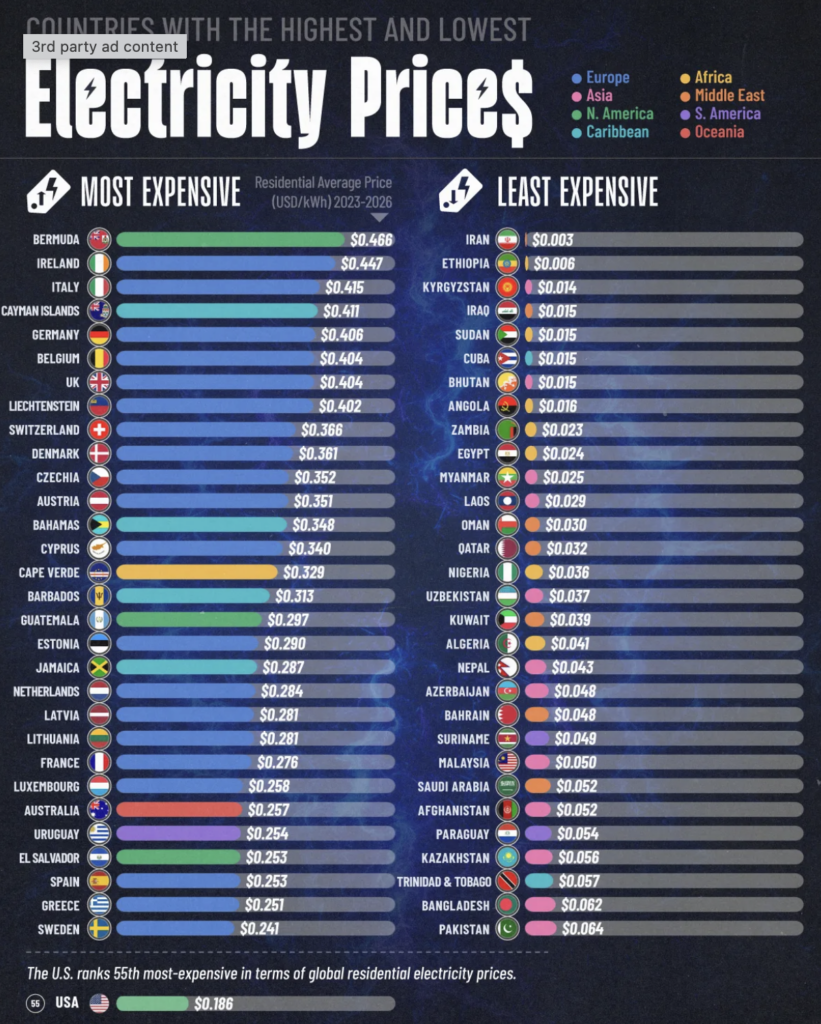
A recent chart compared the electricity costs globally (average 2023-2026). Not surprisingly, UK ranked up there with the most expensive nations. Per (K) watt prices here are more than double that of United States (see below). This price-disparity reduces the competitiveness of a country’s industrial base when energy input costs are this expensive.
As for Germany, its electricity prices are even higher than the UK’s. No wonder the nation is now dubbed the ‘Sick Man of Europe’. Its much-admired industrial base is under assault from cheaper areas. Volkswagen is reported to be sacking 100,00 workers.
Another point about inflation is that it compounds. A lot of time we don’t feel price inflation day-to-day. But the accumulative effects are there, persistently and lasting. After a number of years, we ‘suddenly’ feel things have become much more expensive. By then, it is too late to change the portfolio allocation.
UK Tax Burden Set to Soar
Not only is inflation rising steadily in the UK (Core CPI 2.8% in June 2026), the general taxation is rising as well.
Take wages. In 2025, the UK government increased the tax on wages substantially. This increase, as a matter of fact, is the highest in the developed world (see below).

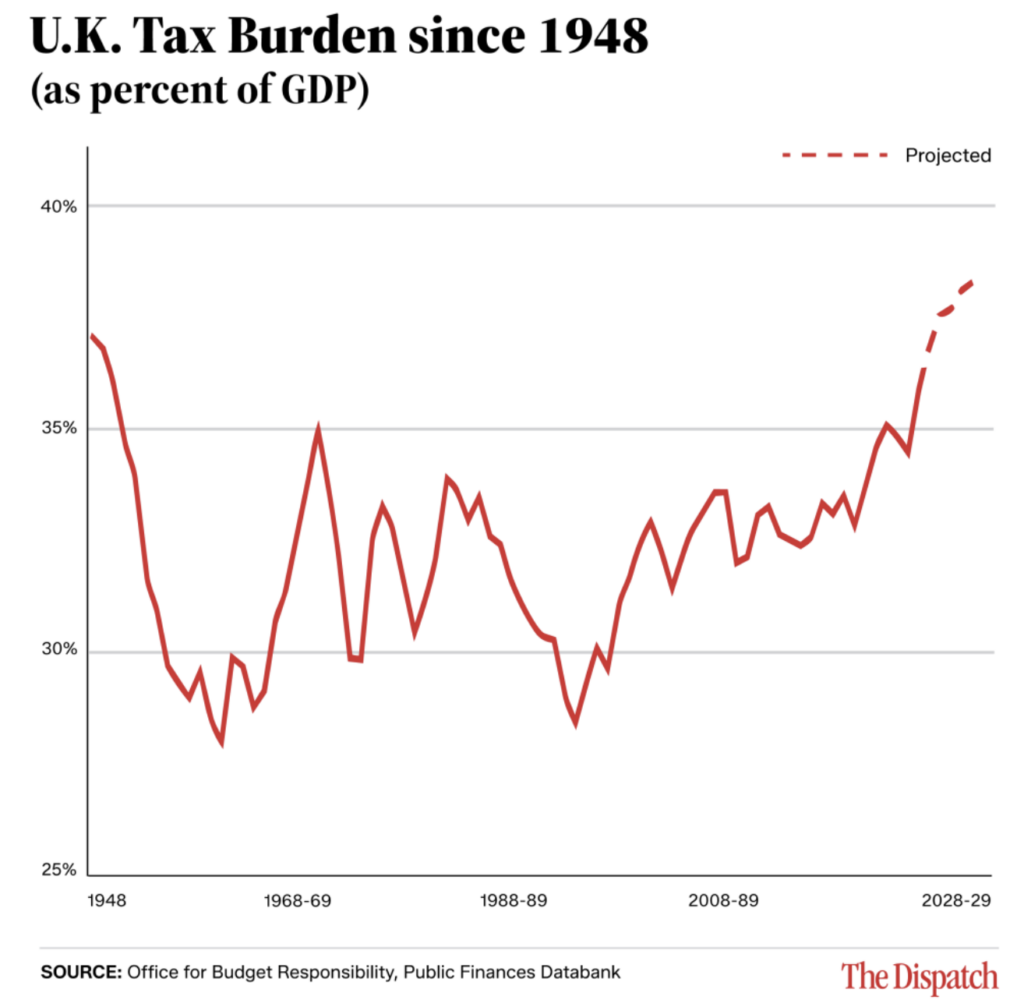
Not surprisingly, the overall tax burden of the country is now projected to rise to the highest level in 80 years.
From a high of 36%, tax as a percentage of the GDP is predicted to increase near 40% in the next few years, especially as the next Labour administration is about to increase tax on property.
In other words, UK corporations and households are being financially squeezed like never before.
Given this economic and financial backdrop, should we be surprised that UK is changing prime minister like never before?
Many pundits are only focussing on the political dynamics of Westminster. But the wider context is that the country is experiencing heavy taxation and steep inflation. As long as these two factors remain unchecked, the electorate will be unhappy. This translates into declining support for the governing party (of whatever colour).
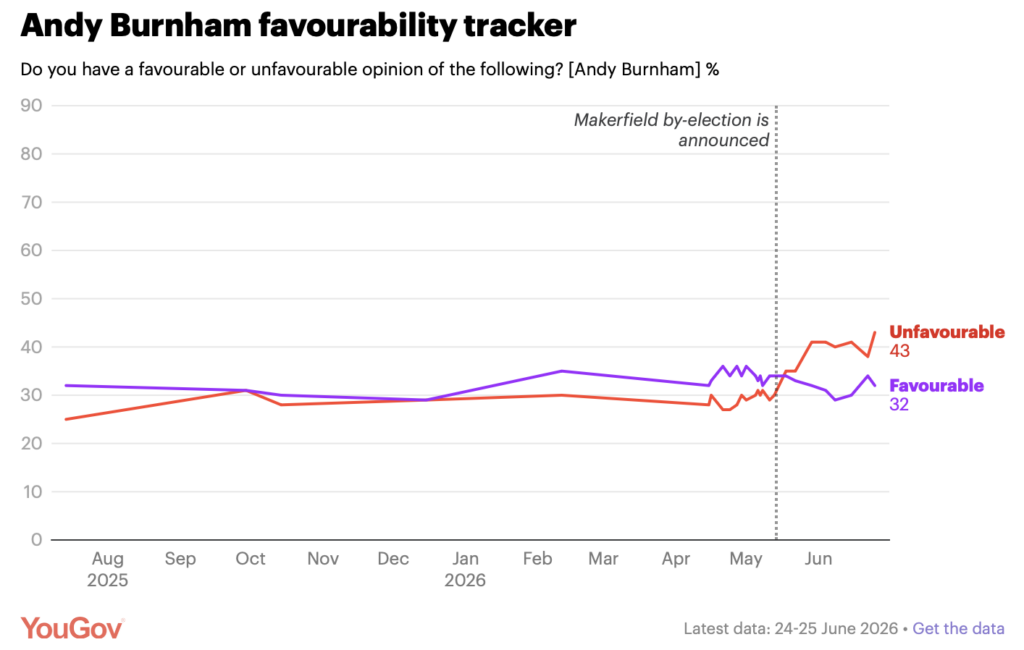
Already, Andy Burnham, the newly-elected MP of Makerfield and the man set to become UK’s next PM, is starting to be polled negatively by YouGov (see below). Of course, he is in early stages to Number Ten and, arguably, his ‘Favourable’ impression should improve until his tenure begins. Then, he will quickly find governance to be a much harder job than campaigning.
The point I wish to stress is this: As long as the electorate is heavily burdened by tax and inflation, no administration will last very long. Stagflation is a real danger for any government.
And every military flare-up accelerates inflationary pressure in the economy. Ukraine was one; Iran another.
Will inflation drop?
One asset that inflation has completely clobbered since 2020 is gilts.
According to this price chart for 10-year gilt, prices lost approximately 40% of its nominal value during the past five years. Adjusting for inflation, this loss would be even more pronounced. While the monetary loss would be cushioned somewhat by coupon payments, investors who bought at the highs (during 2019-2020) and held through to maturity would suffer a drastic loss of purchasing power.
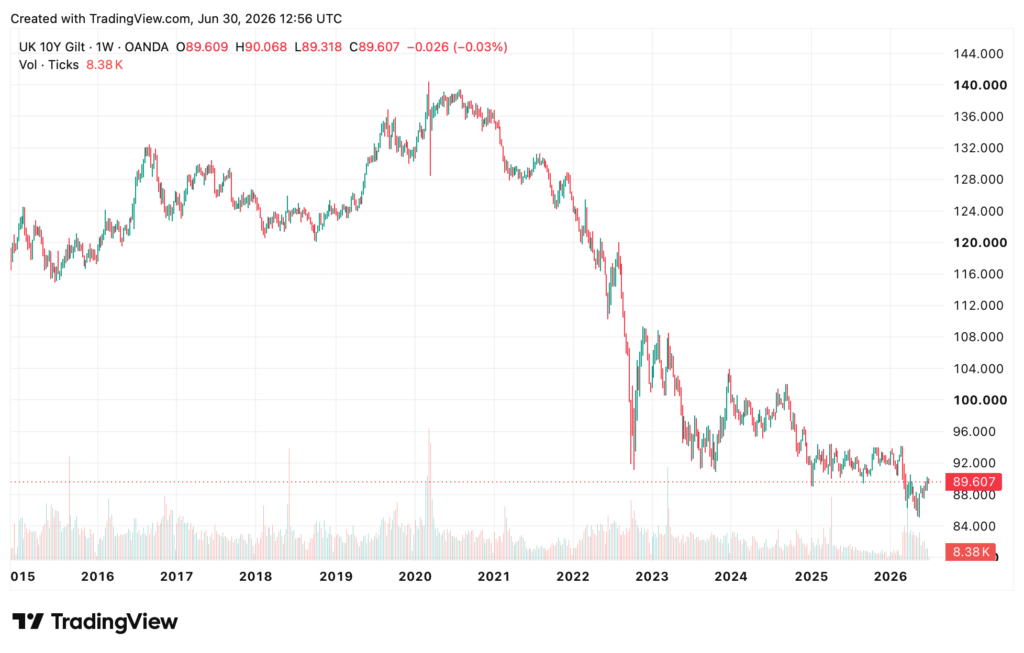
Given this unloved asset class and potential downside assertion failure (at 88), should we watch to buy gilts to bet on a bounce?
Well, only if you believe that inflation is about to turn down permanently. That is, energy prices slump; transport cost drop; and commodity prices to stay subdue. But is this scenario realistic? Given the heightened geopolitical tensions around the world, I would not be too optimistic about a wholesale drop in commodity prices.
Another inflationary point is AI.
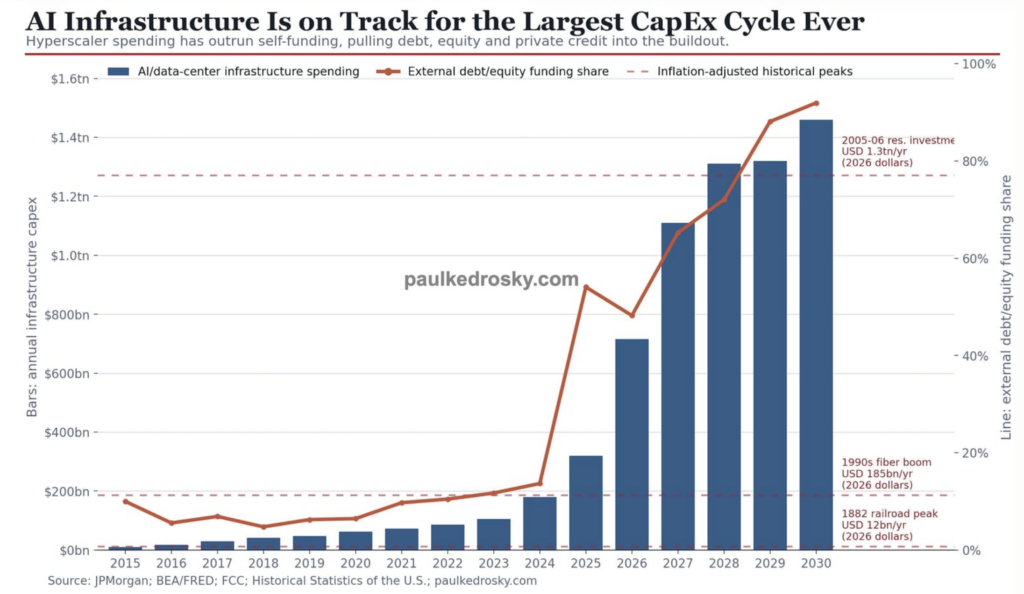
In particular, hyperscalers are currently funnelling a gargantuan amount of capital into AI infrastructure buildout. According to some estimates, AI investment will reach $1 trillion per year until the end of the decade (see below).
What this means is that demand for power, materials, and components will go up. Already, memory prices are skyrocketing. Apple (AAPL) is set to increase prices by 20% due to component shortages.
Of course, at the other end of the spectrum we have the sellers of these products minting handsome profits. Micron Technology (MU), for example, recently reported a quarterly net income of $28 billion due to surging demand for its products.
The point is, given this wall of money heading into AI infrastructure, I hardly think inflation will drop substantially from here. In fact, it may even bounce higher in the next few quarters. I suspect inflation rates in many economies (including the UK) will generally remain sticky.

Jackson is a core part of the editorial team at GoodMoneyGuide.com.
With over 15 years of industry experience as a financial analyst, he brings a wealth of knowledge and expertise to our content and readers.
Previously, Jackson was the director of Stockcube Research as Head of Investors Intelligence. This pivotal role involved providing market timing advice and research to some of the world’s largest institutions and hedge funds.
Jackson brings a huge amount of expertise in areas as diverse as global macroeconomic investment strategy, statistical backtesting, asset allocation, and cross-asset research.
Jackson has a PhD in Finance from Durham University and has authored over 200 guides for GoodMoneyGuide.com.